
Before Exotic baby chicks arrive: Set up the brooder
Set up your brooder about 48 hours before your chicks arrive. This allows time for bedding and equipment to dry and the temperature to set.
Equipment for day one includes:
-
- Brooder: The brooder is the first home of new chicks. Be sure it is comfortable, warm, and draft-free with at least 3 to 4 square feet per chick. The area should be circular and expandable.
- Heat lamp: Assemble a heat lamp in the center of the brooder for bird warmth. Hang the heat lamp about 20 inches above the litter, with 2.5 to 3 feet between the lamp and the guard walls. The temperature under the heat lamp, or comfort zone, should be 95 degrees Fahrenheit, and adequate room in the brooder should be available for the chicks to get out from under the heater if they get too hot. After week one, gradually reduce the heat by 5 degrees Fahrenheit each week until reaching a minimum of 55 degrees.
- Bedding: Add an absorbent wood shavings bedding to the floor of the brooder. Place bedding 3 to 4 inches deep to keep the area dry and odor-free. Remove wet bedding daily, especially around waterers. Do not use cedar shavings or other types of shavings that have a strong odor because the odor could affect the long term health of the bird.
- Lights: Provide 18 – 22 hours of light for the first week. Then reduce light to 16 hours through the growing period or to the amount of light they will receive when they are 20 weeks of age. The amount of light intensity required would be provided by a 40-watt bulb for every 100 square feet (10’ x 10’) of floor space.
- Feeders: Offer 4 linear inches of feeder space for each bird. Clean egg cartons filled with feed make excellent and easily accessible feeders for young chicks. Provide low-lying feeders, or trough feeders, after the transition.
- Waterers: For every 25 chicks, fill two 1-quart waterers with room temperature water and place them in the brooder. To help water stay at room temperature, place the waterers in the brooder, outside the comfort zone (do not position underneath the heat lamp), 24 hours before the chicks’ arrival.
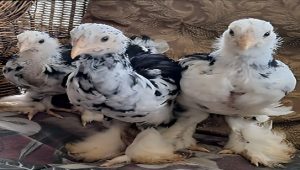
Introduce baby chicks to water
Once chicks arrive, introduce them to the brooding area. Water, at room temperature, should be available, but wait a couple of hours to introduce feed.
This gives chicks a couple hours to drink and rehydrate before they start eating, fresh, quality water is essential for healthy chicks. Dip the beaks of several chicks into the water to help them locate it. These chicks will then teach the rest of the group to drink. Monitor the group to ensure all chicks are drinking within the first couple hours.
Highly recommended
“Excellent customer service and fair prices. Speckled Brahma hatching eggs, I will definitely be back for future hatching eggs. Great purchase.”
Alberto Flores, Orlando, Florida.
Teach baby chicks to eat
After chicks have had a chance to rehydrate, provide the nutrients they need through a complete chick starter feed.
Provide a chick starter feed with at least 18 percent protein to help support the extra energy needed for early growth. The feed should also include amino acids for chick development; prebiotics, probiotics and yeast for immune health; and vitamins and minerals to support bone health.
To provide all the nutrients chicks need for a strong start, choose a starter-grower feed from the Flock Strong.
First, teach the chicks to eat by placing feed on clean egg flats, shallow pans or simple squares of paper. On day 2, add proper feeders to the pens. Once chicks have learned to eat from the feeders, remove the papers, pans or egg flats.
Adjust feed as baby chicks develop
To keep feed fresh: Empty, clean and refill waterers and feeders daily. Also, raise the height of feeders and waterers so they are level with the birds’ backs as chicks grow.
As chicks mature, their nutritional needs change. At age 18 weeks, adjust the feed provided to meet the birds’ evolving nutrition needs.
Transition layer chicks onto a higher-calcium complete feed, Crumbles or Pellets, when they begin laying eggs at age 18 to 20 weeks. For meat birds and mixed flocks, choose a complete feed with 20 percent protein, and feed this diet from day one through adulthood.
Thinking about getting your first chicks? Visit our (Baby Chick Resource Center ) for everything you need to start chicks strong.
Exotic and Rare European Brahma Varieties:
- Blue Porcelain: A soft blue-grey, which and creamy base, light brown.
- Millie Fleur: reddish brown back feathers paired with bay colored breasts and glossy black tails.
- Red Porcelain: Darker tip reddish Solid, deep-brown, creating a striking speckled appearance.
- Lemon/Lemon Pyle: A yellowish-buff with white or black markings.
- Isabel (Lavender/Buff): A rare, soft, pale buff or diluted lavender color.
- Blue-Colombian: Pattern with blue replacing the traditional black in light brahma markings.
- Mottled: A black base with white speckles distributed across the feathers.
- Red Pyle: This beautiful exotic chicken is a rare breed. Red Pyle is a distinct and striking coloration that can be difficult to find as a true breeding bird.
Get In Touch With Us, WhatsApps!
Contact Us
Book By Appointment
Monday, Friday 11:AM – 5:PM Saturday 11:AM – 2:PM Sunday Closed Delivery info: Pickup
Product Shots – Merybrahmausa
[…] starter feed as their primary diet. Congratulations on your baby chick success! You’ve given your chicks a strong start and now it’s time to keep the growing going through weeks 2 and […]
6-8 Week Old Chicks: Moving to the Chicken Coop – Merybrahmausa
[…] 8, your chicks will experience rapid growth and will need twice the floor space they started with. Prepare the chicken coop as the flock’s new home, paying close attention to predator-proofing steps. If the outside […]